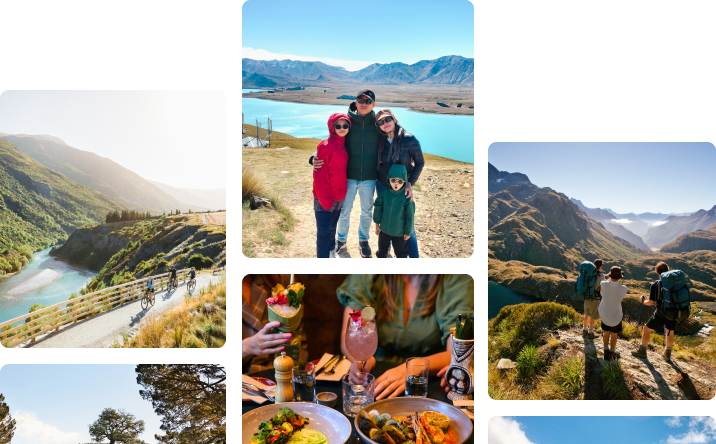


Getting to New Zealand is easier than most people expect, with a growing number of direct international connections. From the United States, you can fly non-stop from cities like Los Angeles, San Francisco, Dallas, Houston, Chicago, and New York. Thanks to the time zone shift, you will arrive “a day ahead,” making the journey feel surprisingly efficient. US passport holders also do not need a visa for stays under 90 days, just a simple NZeTA prior to travel.
So you’d think there’s nothing to worry about. And you’d be mostly right. But after a decade of guiding travellers through Aotearoa, we’ve compiled a list of genuinely critical safety information that no guidebook will tell you. Consider this your survival briefing.
1. Driving on the Left (and Surviving Roundabouts)
New Zealand drives on the left side of the road. This sounds simple until you’re jetlagged, sitting in what your brain insists is the passenger seat, and approaching a roundabout that spins clockwise. The instinct to drift right is strong, particularly on quiet rural roads with no other cars to follow.
Safety tip: This is actually why many of our guests choose a guided tour. Your guide does the driving while you do the gawking. Everyone wins, and no one ends up on the wrong side of a one-lane bridge.

Photo: James Coleman – Unsplash
2. The Kea: New Zealand’s Feathered Criminal Mastermind
Meet the kea: the world’s only alpine parrot, a bird of extraordinary intelligence and absolutely no respect for your personal property. Kea have been documented dismantling windscreen wipers, removing rubber seals from car windows, unzipping backpacks, and stealing sandwiches directly from human hands. They work in teams. They problem-solve.
Safety tip: Never leave bags, shoes, or anything rubber unattended in kea territory. They are not afraid of you, and they are smarter than you think. Your tour guide will know exactly how to manage a kea encounter, though honestly, watching one dismantle your mate’s hiking boot is half the entertainment.

Photo: Daniel Buckle – Unsplash
3. The Great Sandfly Offensive
New Zealand’s West Coast and Fiordland are home to some of the most breathtaking scenery on Earth. They are also home to the sandfly, a tiny insect that treats exposed human skin as an open buffet. These are not the mild inconvenience of a mosquito. Sandfly bites itch for days, sometimes weeks, and they arrive in clouds at dawn and dusk near still water.
Safety tip: Long sleeves, strong insect repellent (we recommend Okarito), and timing your outdoor moments for the middle of the day. Your guide will have repellent in the van, and they’ll know which beaches and viewpoints are sandfly-free. That’s local knowledge that no app can replicate.

Photo: Neil Protheroe – Tour Guide
4. Mastering the Art of the Jandal
In New Zealand, the flip-flop is called a jandal (short for “Japanese sandal”), and it is less a shoe than a national philosophy. Kiwis wear jandals to the supermarket, to restaurants, to petrol stations, and occasionally to job interviews. The jandal tan line, a pale V-shape across the top of the foot, is considered a badge of honour.
Safety tip: Pack proper walking shoes for anything beyond a flat pavement stroll. Save the jandal experiment for the beach. And if a Kiwi tells you a track is “pretty flat, mate” while wearing jandals, they have a lifetime of practice that you do not.

Photo: David Trinks – Unsplash
5. Deciphering “Yeah, Nah” and “Nah, Yeah”
New Zealand English is a dialect of understatement, indirectness, and phrases that mean the exact opposite of what they appear to. “Yeah, nah” means no. “Nah, yeah” means yes. “She’ll be right” can mean anything from “this is perfectly fine” to “this situation is mildly questionable but we’ll carry on.” And when a Kiwi says something is “quite good,” they mean it is exceptional.
Safety tip: When your guide says a hike is “a bit steep in places,” mentally multiply the difficulty by three. When they say the coffee here is “not bad,” order immediately. You’ve just received the highest possible recommendation.

Photo: Dorien Monnens – Unsplash
6. Geothermal Zones: Where the Ground Actually Bites Back
Right, time for an earnest moment. New Zealand sits on the Pacific Ring of Fire, and the geothermal regions around Rotorua, Taupō, and the Tongariro volcanic plateau are genuinely spectacular, with boiling mud pools, vivid mineral springs, steaming vents, and the faint smell of sulphur that locals have long stopped noticing. They are also genuinely dangerous. The ground in thermal areas can be thin crust over boiling water.
Safety tip: Stay on boardwalks and marked trails in all geothermal areas, every single time. Your guide knows these landscapes intimately and will make sure you get close enough for extraordinary photos without getting close enough for an extraordinary insurance claim.

Photo: Hannah Wright – Unsplash
7. The Pavlova Question (Tread Very Carefully)
Finally, the most dangerous social situation you can encounter in New Zealand: suggesting, within earshot of any Kiwi, that pavlova was invented in Australia. This meringue-based dessert, topped with cream and fresh fruit, is a matter of fierce national pride. New Zealand claims it. Australia claims it. Historians remain divided. Feelings do not.
Safety tip: If asked where pavlova comes from, the correct answer is “right here in New Zealand,” regardless of your personal research. This applies even if you are Australian. Especially if you are Australian.

Photo: Leo Roza – Unsplash
Your Guide Knows What the Guidebooks Don’t
If you’re looking for a safe holiday, you can’t beat a trip to New Zealand. Whilst you’re here, our guides don’t just drive the route; they know which roads to avoid at peak hour, which beaches are sandfly-free, which café does the best flat white in the South Island, and exactly when to tell you that “a bit of a walk” actually means you’ll need proper boots and a water bottle.
They’ve navigated kea encounters, translated Kiwi understatement for confused visitors, and kept guests safely on the boardwalk while getting them the perfect geothermal photo. That’s the difference between a road trip and a holiday with The Road Trip.
Ready to Face These Dangers Yourself?
Our team of expert guides will keep you safe from rogue kea, roundabouts, and the pavlova debate. Let us build a private tour tailored to your interests, no survival skills required. START PLANNING YOUR TRIP